
If you have ever visited the Florida Keys, you may have heard about tarpon feeding. It is one of the most popular activities for visitors who want to experience local marine life up close. Tarpon are large, powerful fish known for their silver scales, wide mouths, and impressive jumps. Watching them gather around a dock and swim toward food is an experience that many visitors remember long after their trip.
But what is tarpon feeding, and why do so many people enjoy it?
Tarpon feeding is an activity where visitors feed large tarpon from a dock or designated feeding area. These fish gather near the water’s surface, waiting for food. Visitors can watch them swim around, jump out of the water, and compete for a meal. It is an exciting way to see these impressive fish without needing a fishing boat or any special equipment.
In the Florida Keys, tarpon feeding has become a popular attraction, especially in Islamorada. It gives families, couples, and travelers an opportunity to enjoy local wildlife while learning more about one of the region’s most recognizable fish.
Key Takeaways
- Tarpon feeding is an activity where visitors offer food to large tarpon from a dock or designated feeding area.
- Tarpon are large saltwater fish commonly found in warm coastal waters.
- The Florida Keys is one of the best-known places to experience tarpon feeding.
- Tarpon can grow very large and are famous for their powerful jumps.
- Feeding tarpon gives visitors a close look at these fish without going fishing.
- Visitors should follow local feeding rules and instructions to protect themselves and the fish.
- Robbie’s of Islamorada is a well-known Florida Keys destination where visitors can experience tarpon feeding.
What Is Tarpon Feeding?
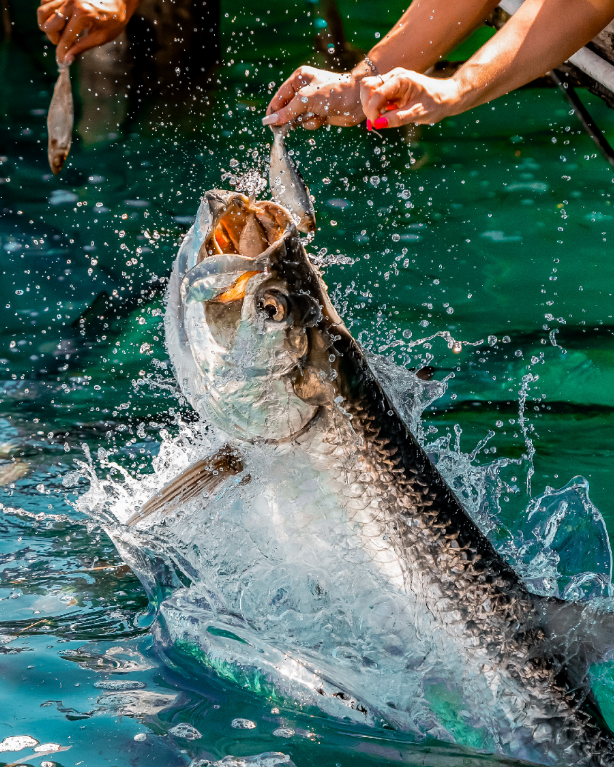
Tarpon feeding is a wildlife experience where people feed tarpon from a waterfront dock. The fish swim close to the surface, often gathering in groups around the feeding area. Visitors can purchase approved bait, follow the instructions provided, and offer food to the fish.
Tarpon have large mouths and powerful bodies. When they spot food, they swim toward it and quickly open their mouths to grab a meal. Sometimes, several fish approach at the same time, creating plenty of movement in the water.
One of the most exciting parts of tarpon feeding is watching these fish jump. Tarpon are known for their ability to leap out of the water, especially when chasing food or trying to escape a hook. Seeing a large silver fish jump just a few feet away can be surprising, particularly for first-time visitors.
Unlike traditional fishing, tarpon feeding does not require a fishing rod, a boat, or any fishing experience. It is a simple activity that allows visitors to interact with local marine life in a designated setting.
What Are Tarpon?
Tarpon are large saltwater fish that belong to the Megalopidae family. Their scientific name is Megalops atlanticus. They are commonly found in the Atlantic Ocean, the Gulf of Mexico, the Caribbean Sea, and coastal waters around Florida.
They are easy to recognize because of their large silver scales, long bodies, and upward-facing mouths. Their appearance is one reason they are sometimes called the Silver King.
Tarpon are also famous among anglers because they are strong fighters. Catching one is considered a major achievement for many saltwater fishing enthusiasts.
Here are some interesting facts about tarpon:
- Size: Adult tarpon can grow over 6 feet long and weigh more than 200 pounds.
- Appearance: They have large silver scales and a strong, streamlined body.
- Habitat: They live in warm coastal waters, bays, estuaries, and lagoons.
- Diet: They eat fish, shrimp, crabs, and other small aquatic animals.
- Breathing: Tarpon can gulp air at the water’s surface using a specialized swim bladder.
- Movement: They are known for jumping high out of the water.
These characteristics make tarpon fascinating to watch, especially when they gather around a feeding dock.
Why Do People Feed Tarpon?
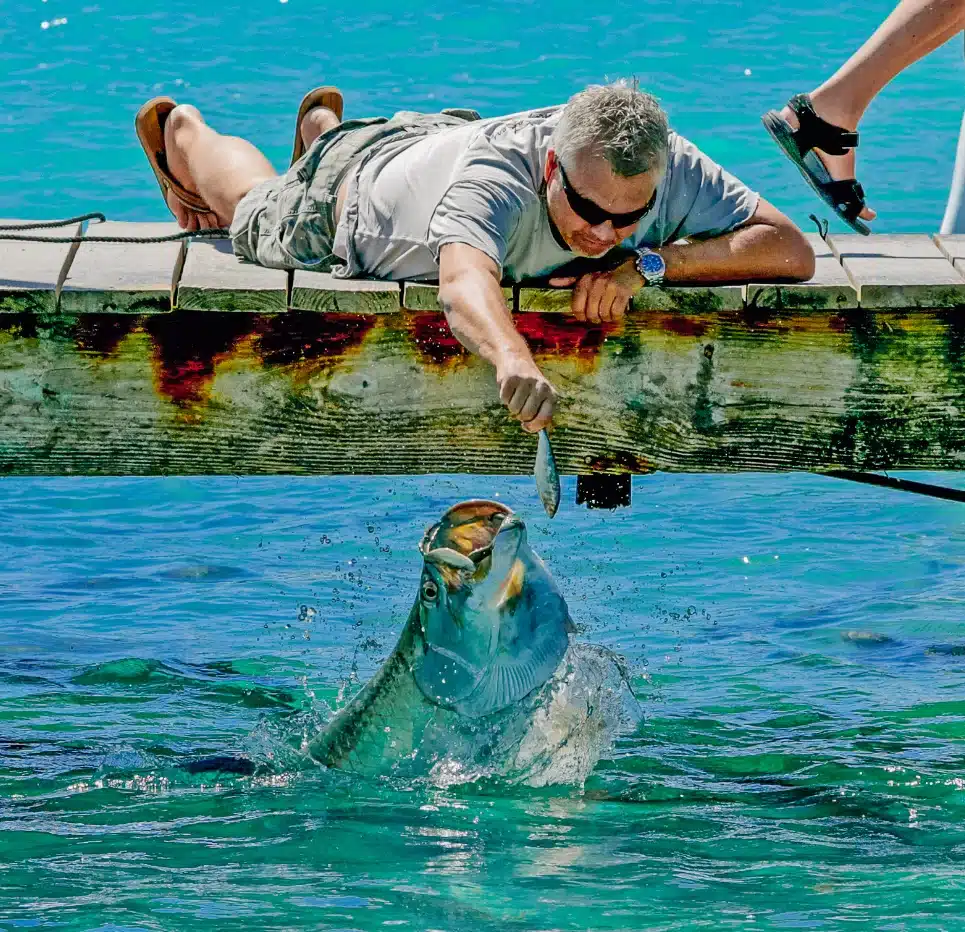
There are several reasons why tarpon feeding has become a popular activity in the Florida Keys.
The biggest reason is the opportunity to see large fish up close. Most people do not regularly get the chance to watch fish of this size swimming just below the surface. Tarpon feeding offers that opportunity in a convenient and enjoyable setting.
It is also an activity that does not require much preparation. You do not need fishing equipment, special clothing, or previous experience. Visitors can simply walk to the dock, purchase food, and enjoy watching the fish.
Here are some reasons people enjoy tarpon feeding:
A Close Look at Large Fish
Tarpon are impressive animals. Watching them swim near the dock gives visitors a better understanding of their size, speed, and movement. Their silver scales often shine when sunlight reflects off the water.
A Fun Family Activity
Tarpon feeding is suitable for many families, including children who enjoy watching animals. Kids often get excited when a large fish comes to the surface to grab food.
Parents should always supervise young children around the water and follow the feeding area’s safety instructions.
A Different Kind of Wildlife Experience
Not every wildlife activity requires a boat trip or a long journey. Tarpon feeding offers a simple way to enjoy marine life while spending time near the water.
Great Photo Opportunities
The large fish, clear water, and waterfront surroundings make tarpon feeding a popular photo opportunity. Visitors often take pictures and videos of tarpon swimming or jumping near the dock.
How Does Tarpon Feeding Work?
If you have never tried tarpon feeding before, you may be wondering what actually happens when you arrive.
The experience is usually simple and does not take much planning.
Here is how a typical tarpon feeding experience works.
1. Visit a Designated Feeding Location
Start by visiting a place that offers tarpon feeding. In Islamorada, Robbie’s of Islamorada is one of the best-known locations for this activity.
The property has a waterfront dock where visitors can observe and feed tarpon.
2. Purchase Food for the Tarpon
Once you reach the feeding area, you can purchase the approved bait available at the location. Follow the staff’s instructions about which food to use and how to offer it.
Do not bring your own food unless the location specifically allows it.
3. Watch the Tarpon Gather
As food becomes available, tarpon may begin gathering near the dock. You can see their large silver bodies moving beneath the water.
Some fish stay near the surface, while others swim around before approaching the food.
4. Offer the Food Safely
Follow the feeding instructions and keep your hands and fingers away from the fish’s mouths. Tarpon have large mouths and can move quickly when grabbing food.
Never lean too far over the dock or put your hands into the water.
5. Enjoy Watching the Fish
Once you offer the food, watch how the tarpon react. Some may swim toward it slowly, while others may approach quickly.
You may even see a fish jump out of the water while trying to catch its meal.
Where Can You Experience Tarpon Feeding in Florida?
The Florida Keys is one of the most popular places to see tarpon. The region has warm coastal waters, mangroves, bridges, channels, and shallow bays that provide suitable habitats for these fish.
Islamorada is particularly well known for its tarpon population and fishing opportunities.
One of the most popular places to experience tarpon feeding is Robbie’s of Islamorada.
Robbie’s of Islamorada
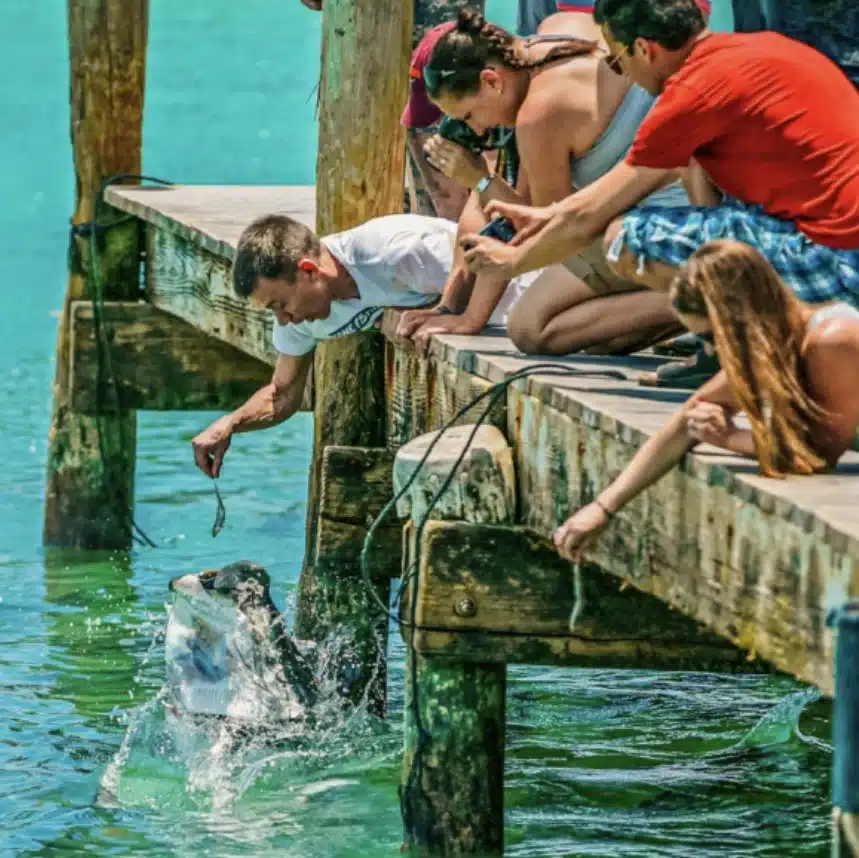
Robbie’s of Islamorada is a well-known waterfront destination in the Florida Keys. It is especially popular for its tarpon feeding experience, where visitors can get close to large tarpon from the dock.
Visitors can purchase bait and feed the fish while watching them swim around the dock. The sight of several large tarpon gathering near the surface makes this an exciting stop for people of different ages.
The experience is also a great addition to a Florida Keys road trip. You can enjoy the waterfront atmosphere, watch local marine life, and explore other activities available at the property.
Robbie’s offers more than tarpon feeding. Visitors can also explore activities such as fishing trips, kayaking, snorkeling, and other waterfront experiences.
If you are visiting Islamorada and want to experience something different from the usual beach activities, Robbie’s is worth adding to your itinerary.
What Is the Best Time for Tarpon Feeding?
Tarpon can be found in Florida waters throughout the year, although their movements and feeding activity change with the seasons.
In the Florida Keys, tarpon activity is often especially noticeable during the warmer months. Spring and summer are popular periods for tarpon fishing because many fish move through the region.
However, tarpon feeding at a designated location is different from looking for wild tarpon while fishing. If the attraction operates throughout the year, visitors may be able to enjoy the experience outside the main fishing season as well.
The best time of day can depend on the location, weather, tides, and feeding schedule.
Here are a few things to consider:
- Morning: A morning visit can be a comfortable way to start your day before temperatures become too high.
- Afternoon: You can combine tarpon feeding with lunch and other activities in Islamorada.
- Warmer months: Tarpon activity is often more noticeable during spring and summer.
- Weather conditions: Heavy rain, strong winds, or rough weather may affect the experience.
Before visiting, check the attraction’s current operating hours and feeding availability.
What Food Do Tarpon Eat?
Tarpon are carnivorous fish. In their natural environment, they mainly eat other aquatic animals.
Their diet includes small fish, shrimp, crabs, and other marine organisms. Young tarpon generally feed on smaller prey, while larger adults can eat bigger fish and crustaceans.
At designated feeding locations, visitors are usually provided with approved bait. The food offered at these places is selected for the feeding experience.
It is important not to feed tarpon random food such as bread, chips, or leftovers. Human food is not an appropriate replacement for their natural diet.
Always use the food provided or approved by the attraction.
Are Tarpon Dangerous?
Tarpon are not generally aggressive toward people, but they are large, powerful wild fish. It is important to remember that they are not pets.
Their size and strong movements mean visitors should be careful when feeding them.
A tarpon can quickly open its mouth and grab food from the surface. If your fingers are too close, you could get hurt.
Here are some basic safety tips to follow:
- Keep your fingers away from the fish’s mouths.
- Do not put your hands into the water.
- Never try to touch or grab a tarpon.
- Keep a safe distance from the edge of the dock.
- Supervise children throughout the activity.
- Follow all instructions provided by staff.
- Do not throw objects or unwanted food into the water.
The goal is to enjoy watching the fish without disturbing them or putting yourself at risk.
Is Tarpon Feeding Safe for Children?
Yes, tarpon feeding can be an enjoyable family activity when visitors follow the safety guidelines.
Children often find the experience exciting because they can see large fish swimming just below the surface. Some may be surprised by how quickly the fish move when food is offered.
However, parents should stay close to their children at all times.
Young children should not lean over the dock or attempt to feed the fish without adult supervision. The fish can move quickly, and the water may be deeper than it appears.
It is also a good idea to explain a few basic rules before starting:
- Do not put your hands in the water.
- Do not try to touch the fish.
- Stay behind any safety barriers.
- Listen to the staff.
- Never run or push near the dock.
With these simple precautions, tarpon feeding can be a memorable part of a family trip to the Florida Keys.
Do You Need Fishing Experience to Feed Tarpon?
No, you do not need any fishing experience to enjoy tarpon feeding.
This is one of the reasons the activity attracts so many visitors. Unlike deep-sea fishing or other fishing trips, tarpon feeding does not require you to understand fishing techniques, use a rod, or know how to handle a fish.
The attraction provides the food and the designated area where visitors can enjoy the experience.
Whether you are visiting Florida for the first time or have lived in the area for years, you can enjoy watching these impressive fish.
It is also a good option for people who want to experience marine life but do not want to spend several hours on a boat.
How Much Does Tarpon Feeding Cost?
The cost of tarpon feeding depends on the attraction and its current pricing.
At many designated feeding locations, visitors pay an admission or dock fee, while approved bait may be purchased separately. Some attractions may include different pricing for adults and children.
At Robbie’s of Islamorada, visitors should check the official website or contact the property for current admission and bait prices before planning their visit.
If you are visiting with a family or a larger group, checking the latest fees in advance can help you plan your budget.
What Should You Bring for Tarpon Feeding?
You do not need much equipment for tarpon feeding, but bringing a few basic items can make your visit more comfortable.
Here are some useful things to bring:
Comfortable clothing: Florida can get hot, especially during summer. Wear light and comfortable clothes.
Sunscreen: If you plan to spend time outdoors, apply sunscreen to protect your skin.
Sunglasses: These can make it easier to enjoy the waterfront without dealing with strong sunlight.
Camera or smartphone: You will probably want to take pictures and videos of the tarpon.
Water: Staying hydrated is important, especially during warmer months.
Comfortable footwear: Wear shoes that are suitable for walking around a waterfront property.
You do not need to bring bait or fishing equipment. Check with the attraction before bringing any food for the fish.
Tarpon Feeding vs. Tarpon Fishing: What Is the Difference?
Tarpon feeding and tarpon fishing may sound similar, but they are two different activities.
Tarpon feeding is mainly a wildlife viewing experience. Visitors offer approved food to fish from a designated dock and watch them gather near the surface.
Tarpon fishing involves catching tarpon using fishing equipment. It requires more preparation, knowledge, and often a fishing guide or boat.
Here is a simple comparison:
| Tarpon Feeding | Tarpon Fishing |
| Mainly for watching and feeding fish | Mainly for catching fish |
| Usually takes place from a dock | Can take place from a boat or shoreline |
| No fishing equipment required | Fishing rod and tackle required |
| Suitable for beginners | Some fishing knowledge is helpful |
| Usually a shorter activity | Can take several hours |
| Food is offered to the fish | Bait or lures are used to catch fish |
Both activities offer different ways to enjoy tarpon. If you want a relaxed experience, feeding may be the better option. If you enjoy fishing and want a challenge, tarpon fishing may be more suitable.
Why Is Islamorada Popular for Tarpon?
Islamorada is often called the Sport Fishing Capital of the World. Its location in the Florida Keys makes it an important destination for anglers and marine life enthusiasts.
The surrounding waters offer a mix of shallow flats, channels, bays, and deeper fishing areas. These environments support a variety of marine species, including tarpon.
Tarpon are especially popular among local anglers because of their size, strength, and ability to jump during a fight.
The area’s fishing culture has also helped make tarpon an important part of the local visitor experience.
Even if you are not interested in fishing, you can still enjoy seeing these fish up close through activities such as tarpon feeding at Robbie’s of Islamorada.
Is Tarpon Feeding Worth It?
If you are visiting the Florida Keys, tarpon feeding is worth considering, especially if you enjoy wildlife and outdoor activities.
It is different from typical tourist attractions because you get to watch real marine animals in their natural coastal environment.
The fish are impressive to see, and their quick movements make the experience entertaining. It is also an activity that does not require a full day or a lot of planning.
Families with children, couples, photographers, and first-time visitors can all enjoy it.
The experience is particularly worthwhile if you are already planning to visit Islamorada. You can combine tarpon feeding with lunch, shopping, fishing, or other waterfront activities.
FAQs About Tarpon Feeding
1. What is tarpon feeding?
Tarpon feeding is an activity where visitors offer approved food to large tarpon from a designated dock or feeding area. It allows people to watch these fish up close without going fishing.
2. Where can I feed tarpon in Florida?
Islamorada in the Florida Keys is one of the best-known places for tarpon feeding. Robbie’s of Islamorada is a popular destination where visitors can feed large tarpon from its waterfront dock.
3. Can you feed tarpon at Robbie’s of Islamorada?
Yes, Robbie’s of Islamorada is well known for its tarpon feeding experience. Visitors can purchase bait and feed the fish from the designated dock.
4. Are tarpon friendly to humans?
Tarpon are generally not aggressive toward people, but they are wild fish. They can move quickly and have powerful mouths, so visitors should avoid touching them or placing their hands in the water.
5. What do tarpon eat?
Tarpon mainly eat fish, shrimp, crabs, and other small aquatic animals. At designated feeding attractions, visitors should use only the food approved or provided by the location.
6. Can children participate in tarpon feeding?
Yes, children can enjoy watching and participating in tarpon feeding when the attraction allows it. Adult supervision is important, and children should follow all dock safety instructions.
7. What is the best season for tarpon feeding?
Spring and summer are popular seasons for tarpon activity in the Florida Keys. However, feeding attractions may operate throughout the year. Check the location’s schedule before visiting.
8. Do I need a fishing license to feed tarpon?
Visitors generally do not need a fishing license for a designated feeding activity because they are not catching fish. Fishing licenses and regulations may apply if you plan to catch tarpon.
9. How big can tarpon grow?
Adult Atlantic tarpon can grow over 6 feet long and weigh more than 200 pounds. Their large size and silver appearance make them easy to recognize.
10. Can you touch tarpon while feeding them?
No. Visitors should not try to touch or grab tarpon. They are powerful wild fish, and keeping your hands away from their mouths is important for safety.
Conclusion
Tarpon feeding is a simple but exciting way to experience marine life in the Florida Keys. It gives visitors the chance to see large silver fish up close, watch them gather around a dock, and learn more about one of the region’s most interesting fish species.
Whether you are traveling with family, visiting Islamorada for the first time, or simply looking for something different to do, tarpon feeding is an activity worth adding to your plans.
If you are in Islamorada, make time to visit Robbie’s of Islamorada. Its famous tarpon feeding experience offers a memorable way to enjoy the waterfront and get closer to the marine life that makes the Florida Keys so special.