
Stand up paddle boarding, often called SUP, is one of the easiest and most enjoyable ways to explore lakes, rivers, bays, and calm ocean waters. It combines balance, paddling, and light exercise while allowing you to enjoy nature at your own pace. Whether you want a relaxing ride or a full-body workout, learning how to paddle board is a great skill that almost anyone can master.
If you are new to paddle boarding, you may wonder how to stand up, hold the paddle, stay balanced, or turn the board. The good news is that with the right equipment and a few basic techniques, you can feel comfortable on the water in a short amount of time.
This guide covers everything beginners need to know, from choosing the right gear to paddling safely and improving your skills.
What Is Paddle Boarding?
Stand up paddle boarding is a water sport where you stand on a large, stable board and use a long paddle to move across the water. It can be enjoyed on lakes, rivers, calm coastal waters, and even gentle ocean waves.
People paddle board for many reasons, including:
- Relaxation
- Exercise
- Exploring nature
- Fishing
- Yoga
- Photography
- Family outings
It is suitable for most ages and fitness levels, making it a popular outdoor activity around the world.
Equipment You Need
Before heading onto the water, make sure you have the right equipment.
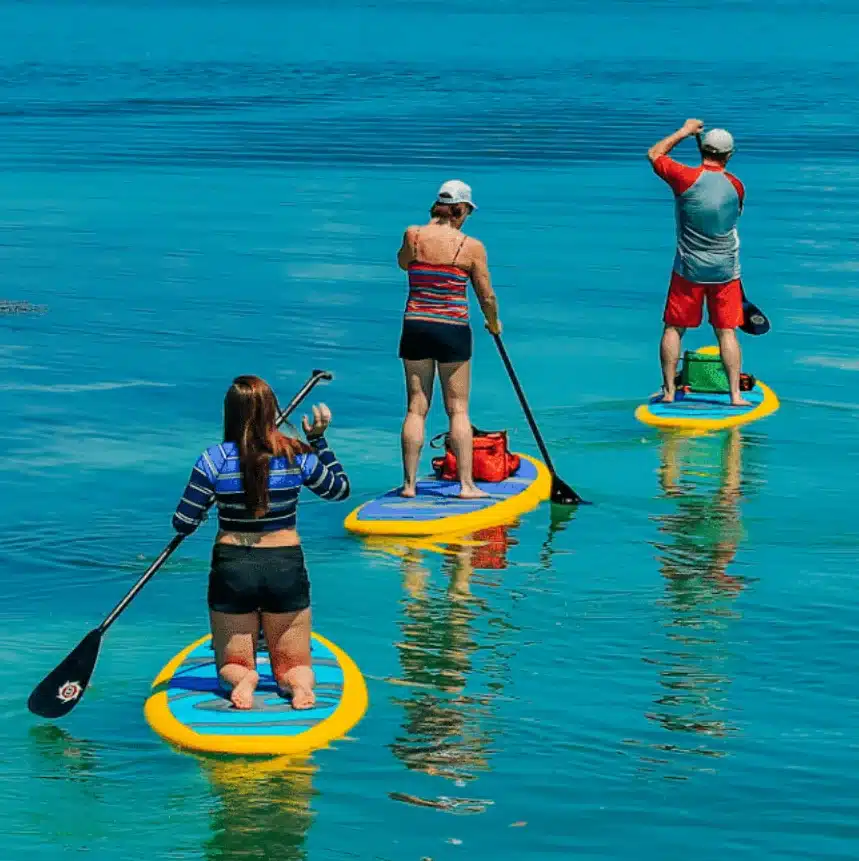
Paddle Board
Choose a board that matches your experience level and intended use.
Beginners should look for:
- Wide and stable design
- Length between 10 and 11.5 feet
- Good weight capacity
- Non-slip deck pad
Inflatable paddle boards are lightweight, portable, and easy to store, while hard boards often provide slightly better performance.
Paddle
A SUP paddle should be adjusted to your height. A general rule is to make the paddle about 6 to 10 inches taller than you.
Personal Flotation Device (PFD)
Wear a properly fitted life jacket or personal flotation device whenever you paddle. Even experienced paddlers should carry one.
Leash
A leash connects your ankle to the board. If you fall, it helps keep the board from drifting away.
Proper Clothing
Wear clothing suitable for the weather and water temperature. Common options include:
- Swimsuit
- Quick-dry shorts
- Rash guard
- Water shoes
- Hat
- Sunglasses with a retention strap
Sun Protection
Bring:
- Sunscreen
- Lip balm with SPF
- Water bottle
- Dry bag for valuables
Choosing the Right Location
Your first paddle boarding experience should take place in calm water.
Good beginner locations include:
- Small lakes
- Calm bays
- Slow-moving rivers
- Protected beaches
Avoid:
- Strong currents
- Large waves
- Heavy boat traffic
- High winds
Calm conditions make learning much easier and safer.
How to Carry a Paddle Board
Paddle boards can be large, but most have a center carrying handle. Lift the board using the center handle and carry it at your side.
If the board is heavy, ask someone to help you. Avoid dragging the board across rocks or rough surfaces, as this can damage it.
How to Set Up Your Paddle Board
Before entering the water:
Check Your Equipment
Inspect:
- Board
- Paddle
- Leash
- Air pressure if using an inflatable board
Attach the Leash
Secure the leash around your ankle or calf according to the manufacturer’s instructions.
Adjust the Paddle
The paddle should reach roughly your wrist when your arm is raised above your head.
Store Your Gear
Place items like water bottles or dry bags under the board’s storage bungee if available.
How to Get on a Paddle Board
Start in Shallow Water
Walk the board into knee-deep water. This helps protect the board’s fin from hitting the bottom.
Kneel First
Place both knees on the center of the board. Hold the paddle across the board for extra stability.
Take a few strokes while kneeling to get comfortable.
How to Stand Up on a Paddle Board
Standing is easier than many beginners expect.
Step 1: Position Yourself
Your knees should be near the center carrying handle.
This is usually the board’s balance point.
Step 2: Place Your Hands
Hold the paddle across the board for support.
Step 3: Lift One Foot
Replace one knee with one foot.
Then replace the other knee with your second foot.
Step 4: Slowly Stand
Keep your knees slightly bent.
Rise slowly instead of standing up quickly.
Step 5: Look Ahead
Do not stare at your feet.
Looking toward the horizon helps improve your balance.
How to Hold the Paddle Correctly
Holding the paddle properly makes paddling easier and more efficient.
Top Hand
Place one hand on the handle at the top.
Lower Hand
Place your other hand partway down the shaft.
Blade Direction
The paddle blade should angle slightly forward, away from you. Many beginners accidentally hold it backward, making paddling less effective.
How to Paddle Forward
Forward paddling is the most basic skill.
Reach Forward
Extend the paddle into the water near the front of the board.
Pull Back
Pull the paddle alongside the board using your core muscles rather than just your arms.
Remove the Paddle
Lift the paddle out of the water near your feet.
Switch Sides
Take several strokes on one side before switching to the other.
This helps keep the board moving straight.
How to Turn a Paddle Board
Turning becomes easier with practice.
Sweep Turn
Place the paddle near the front of the board. Make a wide sweeping motion toward the back.
This creates a gradual turn.
Reverse Stroke
Place the paddle near the back of the board. Push it toward the front.
This helps slow the board or turn it.
How to Stop a Paddle Board
Stopping is simple. Reduce your paddling speed. Use a reverse stroke to slow the board until it stops.
Always allow extra distance when approaching docks, beaches, or other paddlers.
How to Stay Balanced
Balance is one of the biggest concerns for beginners.
These tips can help:
Keep Your Feet Shoulder Width Apart
A wider stance creates better stability.
Bend Your Knees Slightly
Locked knees make balancing more difficult.
Engage Your Core
Use your stomach and back muscles to stay steady.
Relax
Tension makes balancing harder.
Stay loose and let the board move naturally beneath you.
Look Forward
Focus on the horizon instead of looking down.
What to Do If You Fall
Everyone falls while learning.
If you lose your balance:
- Fall away from the board if possible.
- Keep hold of your paddle.
- Use your leash to pull the board back.
- Climb onto the board from the side near the center.
- Return to a kneeling position before standing again.
Falling is a normal part of learning.
Paddle Boarding Safety Tips
Safety should always come first.
Wear a Life Jacket
A personal flotation device provides extra protection.
Check the Weather
Avoid storms, strong winds, and rough water.
Stay Close to Shore
Beginners should remain within a comfortable swimming distance.
Tell Someone Your Plan
Let a friend or family member know where you are going.
Bring Water
Stay hydrated, especially on hot days.
Avoid Overcrowded Areas
Choose open water with fewer boats and swimmers.
Common Beginner Mistakes
Learning from common mistakes can help you improve faster.
Standing Too Far Forward or Back
Stand near the center of the board for the best balance.
Looking Down
Keep your eyes forward instead of staring at your feet.
Using Only Your Arms
Use your core muscles for stronger and more efficient strokes.
Holding the Paddle Backward
Make sure the paddle blade faces the correct direction.
Choosing Windy Conditions
Strong winds make paddle boarding much more difficult for beginners.
Tips to Improve Your Paddle Boarding Skills
As you become more comfortable, focus on improving your technique.
- Practice regularly.
- Paddle on calm water first.
- Strengthen your core muscles.
- Learn efficient paddle strokes.
- Improve your balance with simple exercises.
- Watch experienced paddlers.
- Take a beginner lesson if available.
The more time you spend on the water, the more confident you will become.
Benefits of Paddle Boarding
Paddle boarding offers more than just fun.
Some of its biggest benefits include:
Full-Body Workout
It works your:
- Legs
- Core
- Back
- Shoulders
- Arms
Low-Impact Exercise
SUP is gentle on the joints compared to many land-based activities.
Better Balance
Standing on the board naturally improves balance and coordination.
Stress Relief
Being on the water can help you relax and reduce stress.
Time Outdoors
Paddle boarding is a great way to enjoy fresh air and explore natural surroundings.
FAQs On How to paddle board
Can I paddle board with my dog?
Yes. Many paddle boards are stable enough for dogs. Start in calm water and let your dog get comfortable on the board before heading farther from shore.
What time of day is best for paddle boarding?
Early morning is often the best time because the water is usually calmer, there is less wind, and temperatures are more comfortable.
Can I paddle board in cold weather?
Yes, but you should wear clothing designed for cold water conditions, such as a wetsuit or drysuit, depending on the water temperature.
How much weight can a paddle board hold?
The weight capacity varies by board. Always check the manufacturer’s recommended weight limit to ensure the best performance and stability.
Can two people ride on one paddle board?
Some larger paddle boards are designed to support two adults or an adult and a child. Be sure to stay within the board’s weight limit.
Is an inflatable paddle board durable?
Yes. Quality inflatable paddle boards are made from strong materials and are designed to withstand regular use when properly cared for.
Can I paddle board on a river?
Yes, but beginners should choose slow-moving rivers with little current. Fast-moving rivers require more experience and additional safety precautions.
How do I transport a paddle board?
Hard boards are typically carried on a roof rack, while inflatable boards can be deflated, rolled up, and stored in a carrying bag.
Do I need lessons before paddle boarding?
Lessons are not required, but taking a beginner class can help you learn proper techniques, improve your confidence, and avoid common mistakes.
How should I clean my paddle board after use?
Rinse your board with fresh water after each use, especially after paddling in saltwater. Allow it to dry completely before storing it in a cool, shaded place.
Conclusion
Paddle boarding is a fun and rewarding activity that anyone can learn with a little practice. By choosing the right equipment, starting in calm water, and following basic safety tips, you can build confidence and enjoy every trip on the water. Whether you paddle for fitness, relaxation, wildlife viewing, or simply to explore new places, stand up paddle boarding offers an unforgettable outdoor experience.
If you are visiting the Florida Keys or planning a trip there, it is one of the best places to enjoy paddle boarding. The clear turquoise waters, calm bays, and beautiful coastal scenery make it an ideal destination for beginners and experienced paddlers alike. Exploring the waters around Robbie’s of Islamorada is a great way to experience the natural beauty of the Keys while creating lasting memories on the water.