
Key Takeaways
- Canoes have an open design and usually use a single-bladed paddle, while kayaks use a double-bladed paddle.
- Kayaks are generally narrower and easier to maneuver, making them popular for solo paddling and longer trips.
- Canoes offer more open space, making them useful for families, fishing, camping, and carrying gear.
- Both canoes and kayaks can be stable, but stability depends on the boat's design and intended use.
- The best choice depends on where you plan to paddle, how many people are going, and how much gear you need to carry.
Canoes and kayaks are both popular types of small watercraft, but they are designed differently and offer different experiences on the water. If you are planning to go paddling, fishing, exploring, or simply spending time on a lake, river, or coastal waterway, understanding the difference between a canoe and a kayak can help you choose the right option.
The main difference between a canoe and a kayak is their design, seating position, paddle type, and how they are handled on the water. A canoe usually has an open top and a single-bladed paddle, while a kayak generally has a closed deck or cockpit and uses a double-bladed paddle.
Let’s look at the key differences between canoe and kayak and understand which one may be better for different activities.
What Is a Canoe?
A canoe is a lightweight boat with an open design. The top of the boat is mostly open, making it easy to get in and out. Canoes are usually wider than kayaks and can carry more than one person.
Canoes are commonly paddled while sitting on a raised seat or kneeling on the bottom of the boat. The paddler normally uses a single-bladed paddle, switching the paddle from one side to the other as needed.
Canoes come in different sizes and designs. Some are made for calm lakes and recreational paddling, while others are built for rivers, fishing, camping, or carrying gear.
Because of their open design and larger capacity, canoes are often a good choice for families, groups, and people who want to bring equipment with them.
What Is a Kayak?
A kayak is a narrow watercraft that is usually designed for one or two people. Most recreational kayaks have a cockpit where the paddler sits with their legs extended in front of them. Some modern kayaks, known as sit-on-top kayaks, have an open seating area instead.
Kayaks are normally paddled with a double-bladed paddle. The paddler alternates strokes from one side to the other without needing to change the position of the paddle.
Kayaks are available for many different activities, including recreational paddling, fishing, touring, whitewater adventures, and ocean exploration.
Their narrow shape and efficient design can make kayaks easier to maneuver and faster to paddle than many recreational canoes.
Difference Between Canoe and Kayak
The difference between canoe and kayak can be understood by looking at several important features.
1. Seating Position
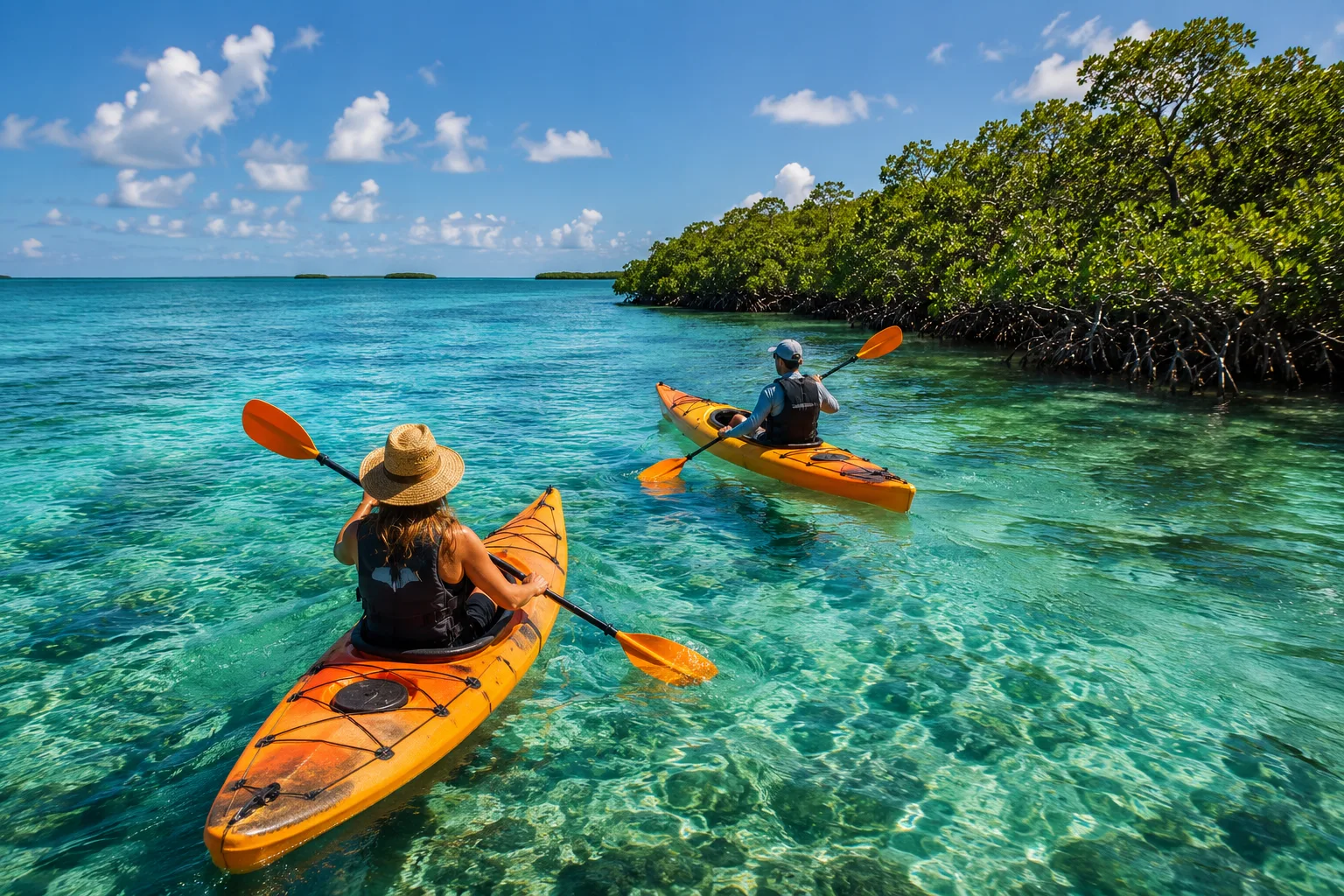
One of the most noticeable differences is how you sit.
In a canoe, you can usually sit on a raised bench seat or kneel inside the boat. The open interior gives you more room to move around.
In a traditional kayak, you sit inside a cockpit with your legs stretched forward. Your body is positioned lower in the boat, which can provide a stable and connected feeling while paddling.
Sit-on-top kayaks are different because the paddler sits on top rather than inside a cockpit.
2. Paddle Type
Canoes and kayaks use different paddles.
A canoe typically uses a single-bladed paddle. You paddle on one side at a time and switch sides when needed.
A kayak uses a double-bladed paddle. The blades are positioned at opposite ends of the paddle, allowing you to take strokes on both sides without changing your grip.
The double-bladed paddle can make kayaking feel efficient and straightforward, especially for beginners.
3. Boat Design
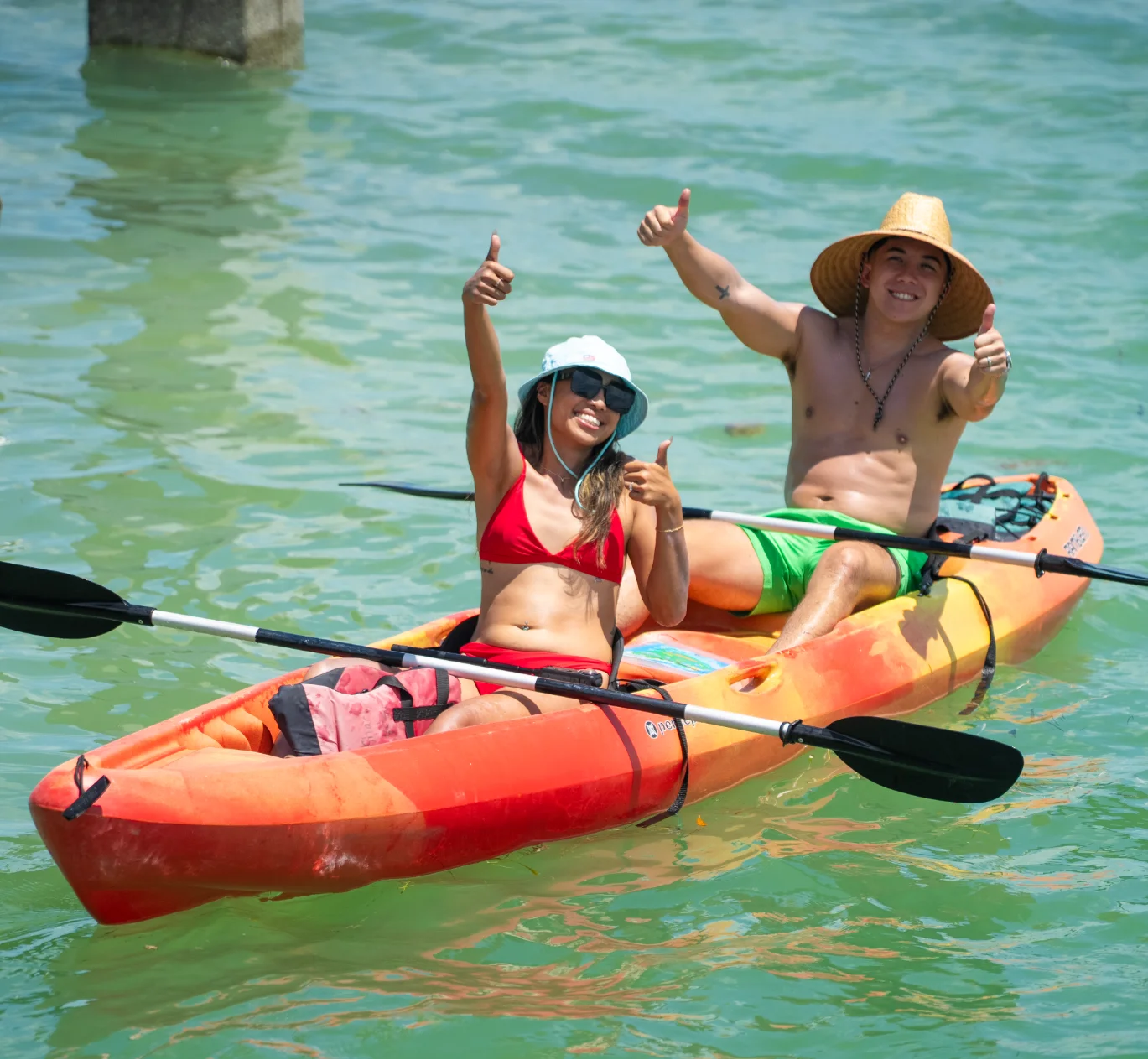
Canoes usually have a wider and more open design. Their sides can be relatively high, and the open interior provides space for people, coolers, fishing equipment, camping supplies, or other gear.
Kayaks are generally narrower and more enclosed. Their design allows them to move efficiently through the water.
The shape of a kayak can vary greatly depending on its purpose. A recreational kayak may be wide and stable, while a touring kayak can be long and narrow for efficient travel.
4. Stability
Both canoes and kayaks can be stable, but their stability feels different.
Canoes often provide good initial stability because of their wider hull. This can make them comfortable for relaxed paddling and carrying passengers or equipment.
Kayaks can also be very stable, particularly recreational and sit-on-top models. Their lower seating position can help the paddler maintain balance.
The stability of either boat depends on its hull design, width, length, weight distribution, and intended use.
5. Speed
Kayaks are often faster and more efficient for covering long distances, particularly when comparing a narrow touring kayak with a general recreational canoe.
The streamlined shape of many kayaks allows them to move efficiently through the water. Their double-bladed paddles also allow paddlers to maintain a consistent rhythm.
Canoes can still travel at a good speed, but their wider design and single-bladed paddling technique may require more effort for long-distance travel.
For casual trips, however, the difference in speed may not matter much.
6. Maneuverability
Canoes and kayaks can both be maneuverable, but they handle differently.
Kayaks are generally easy to control with a double-bladed paddle. The paddler can quickly make strokes on either side, which helps with turning and maintaining direction.
Canoes can also turn effectively, especially when paddled by someone with experience. However, controlling a canoe with a single-bladed paddle can take some practice.
For narrow rivers, recreational kayaking, and situations that require frequent changes in direction, many people find kayaks easier to handle.
7. Capacity
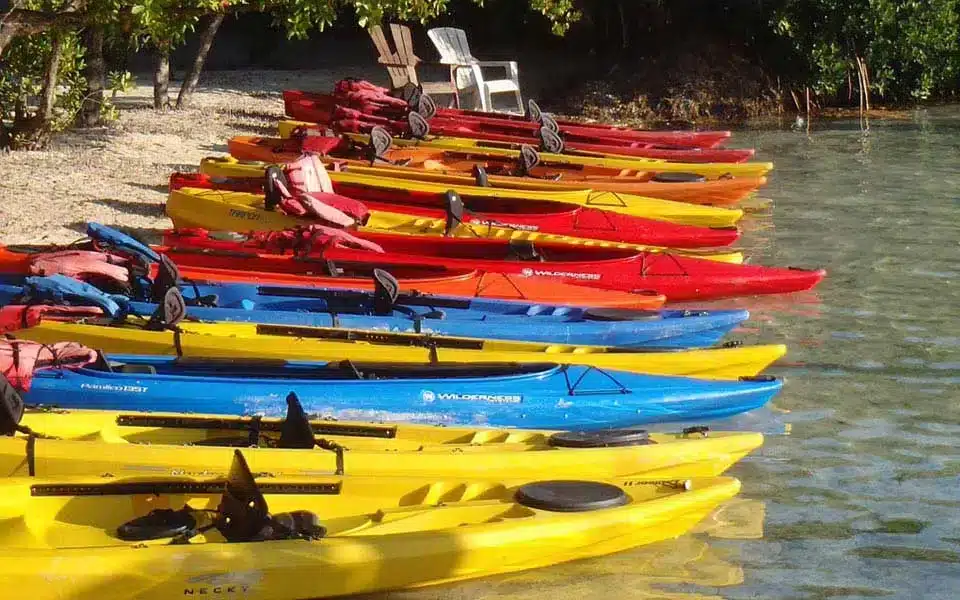
Canoes generally have more room for passengers and equipment.
A typical canoe can accommodate two or more people, depending on its design. There is also plenty of open space for bags, fishing equipment, food, camping gear, and other supplies.
Kayaks are commonly designed for one person, although tandem kayaks are available for two paddlers.
If carrying people or a large amount of gear is important, a canoe may be the more practical choice.
8. Ease of Getting In and Out
A canoe’s open design makes getting in and out relatively easy. This can be useful when stopping along a shoreline, fishing, or taking breaks.
Traditional kayaks with enclosed cockpits can take more effort to enter and exit. Beginners may need some practice, particularly if the kayak is narrow.
Sit-on-top kayaks are generally easier to enter and exit because there is no enclosed cockpit.
9. Comfort
Comfort depends heavily on the boat and the person using it.
Canoes provide an open seating area and plenty of room to change position. This can be helpful during longer trips.
Kayaks provide more support around the lower body. Some paddlers prefer this because it creates a more connected position and allows better control of the boat.
For longer trips, the quality of the seat and the fit of the boat can be just as important as whether it is a canoe or kayak.
Canoe vs Kayak for Fishing
Both canoes and kayaks can be excellent for fishing.
A canoe provides plenty of room for tackle boxes, coolers, rods, and other equipment. The open design also makes it easy to move around.
Fishing kayaks are often designed with features such as rod holders, storage compartments, adjustable seats, and areas for fishing equipment. They can be easier to maneuver into smaller areas and shallow water.
If you need plenty of storage and want to fish with another person, a canoe may be a good option. If you prefer a smaller craft that is easy to maneuver and fish from, a fishing kayak may be a better fit.
Canoe vs Kayak for Beginners
Both can be suitable for beginners.
A recreational canoe can feel comfortable because it has an open design and plenty of space. However, learning how to control a canoe with a single-bladed paddle can take some practice.
A recreational kayak is often easy for beginners to learn because the double-bladed paddle makes basic forward movement relatively simple.
A wide recreational kayak can provide a good balance of stability and ease of use. Beginners should choose a boat designed for calm water rather than immediately selecting a specialized kayak or canoe for challenging conditions.
Canoe vs Kayak for Rivers
The best option for a river depends on the type of river.
For calm rivers with slow-moving water, both canoes and kayaks can work well. Canoes provide extra space for gear and passengers, while kayaks are often easier to maneuver.
For faster rivers and whitewater, specialized kayaks and canoes are available. These boats are designed differently from recreational models and require appropriate skills and safety equipment.
It is important to understand the conditions before taking any canoe or kayak onto moving water.
Canoe vs Kayak for Ocean and Coastal Water
Kayaks are often preferred for coastal paddling because many models are designed to handle longer distances and changing water conditions.
Touring kayaks can provide efficient movement through open water and offer storage for longer trips. Sit-on-top kayaks are also popular for recreational coastal activities.
Canoes can be used in protected coastal areas, but their suitability depends on the boat design, weather, waves, and paddler’s experience.
For any open-water activity, conditions should be checked before heading out.
Which Is Easier to Learn: Canoe or Kayak?
For many beginners, kayaking can feel easier at first because the double-bladed paddle provides a simple and consistent paddling motion.
However, both activities require practice. Learning basic strokes, turning, stopping, balancing, and controlling the boat is important regardless of which craft you choose.
Your comfort level, the type of water, and the specific boat can make a bigger difference than whether you choose a canoe or kayak.
Also Read: Is Kayaking Good Excercise?
Which One Should You Choose?
The right choice depends on what you want to do.
Choose a canoe if you:
- Want more open space
- Need to carry several people or lots of equipment
- Plan to fish with another person
- Want room for camping or outdoor gear
- Prefer an open boat design
Choose a kayak if you:
- Want a smaller and more streamlined boat
- Prefer using a double-bladed paddle
- Want to paddle alone
- Plan to cover longer distances
- Want a boat that is easy to maneuver
- Prefer a lower seating position
There is no single winner between the two. The best choice depends on your activity, the type of water you plan to explore, and your personal comfort.
FAQs On Difference Between A Canoe And A Kayak
Can you use a canoe or kayak in bad weather?
It is best to avoid canoeing or kayaking during storms, strong winds, heavy rain, or rough water. Check the weather forecast before going out and return to shore if conditions become unsafe.
Do canoes and kayaks need to be registered?
Registration requirements depend on where you use the boat and local regulations. Some areas require registration for motorized vessels but may have different rules for non-motorized canoes and kayaks. Check the local boating authority for current requirements.
How should you store a canoe or kayak?
Store the boat in a dry, shaded area away from direct sunlight when possible. Keep it supported properly to prevent deformation, and follow the manufacturer’s storage recommendations.
Can you take a dog on a canoe or kayak?
Yes, many people take dogs on canoes and kayaks. Choose a stable boat with enough space and use a properly fitted pet life jacket, especially when paddling on open or moving water.
What should you wear while canoeing or kayaking?
Wear comfortable clothing suitable for the weather and water temperature. A properly fitted personal flotation device should be worn while paddling.
Can you paddle a canoe or kayak upstream?
Yes, but paddling upstream requires more effort because you are working against the current. Check the current strength and your experience level before attempting to travel upstream.
How do you clean and maintain a canoe or kayak?
Rinse the boat with fresh water after use, especially after exposure to saltwater. Remove dirt and debris, allow it to dry properly, and inspect the hull, seats, fittings, and other components regularly.
Can you use a canoe or kayak at night?
Night paddling may be allowed in some areas, but additional safety precautions may be required. Carry appropriate lights, wear a personal flotation device, and make sure you can clearly identify other boats and hazards.
What safety equipment should you carry on a canoe or kayak?
A personal flotation device is essential. Depending on the location and conditions, you may also need a whistle, light, first-aid supplies, communication device, water, and other safety equipment.
How do you choose the right size canoe or kayak?
Consider the number of paddlers, your body size, the amount of gear you want to carry, and where you plan to paddle. Longer boats can be useful for covering distance, while shorter boats are often easier to maneuver.
Conclusion
The difference between canoe and kayak comes down to more than just the paddle. Canoes typically have an open design, higher seating position, single-bladed paddles, and more room for passengers and equipment. Kayaks are generally narrower, use double-bladed paddles, and place the paddler in a lower seating position.
For families, fishing trips, camping, and carrying lots of gear, a canoe can be a practical choice. For solo paddling, maneuverability, recreational exploration, and longer trips, a kayak may be more suitable.
Both offer a fun way to explore the water. The best option is the one that matches your experience, activity, and the conditions where you plan to paddle.